

Hey there! I'm a supplier of Phosphor Bronze, and I often get asked how to improve the strength of this amazing alloy. Phosphor Bronze is a type of bronze that contains phosphorus as an alloying element, which gives it some unique properties. It's widely used in various industries because of its good corrosion resistance, high fatigue strength, and excellent spring characteristics. But sometimes, you might need to boost its strength even more for specific applications. So, let's dive into some ways to do that.
Understanding Phosphor Bronze
Before we talk about improving its strength, let's quickly go over what makes Phosphor Bronze special. There are different grades of Phosphor Bronze, like C54400 Phosphor Bronze and PB1 Phosphor Bronze. These grades have slightly different compositions, which affect their properties.
The basic composition of Phosphor Bronze usually includes copper, tin, and a small amount of phosphorus. The tin content can range from about 3% to 10%, and the phosphorus content is typically around 0.01% to 0.5%. The addition of phosphorus helps in deoxidizing the alloy during the melting process and also improves its mechanical properties.
Heat Treatment
One of the most common ways to improve the strength of Phosphor Bronze is through heat treatment. Heat treatment involves heating the alloy to a specific temperature and then cooling it at a controlled rate. This process can change the microstructure of the alloy, which in turn affects its strength.
Annealing
Annealing is a heat treatment process where the Phosphor Bronze is heated to a high temperature (usually around 500 - 700°C) and then slowly cooled. This helps to relieve internal stresses in the alloy and also makes it more ductile. However, annealing alone might not always increase the strength. In fact, it can sometimes reduce the strength slightly, but it improves other properties like formability.
Quenching and Tempering
Quenching and tempering is a more complex heat treatment process that can significantly increase the strength of Phosphor Bronze. First, the alloy is heated to a high temperature (around 700 - 800°C) and then rapidly cooled (quenched) in a medium like water or oil. This rapid cooling creates a hard and brittle microstructure. To reduce the brittleness and improve the toughness, the alloy is then tempered by heating it to a lower temperature (around 200 - 400°C) and holding it there for a certain period of time.
The key to successful quenching and tempering is to control the heating and cooling rates carefully. If the cooling rate is too fast, the alloy might crack, and if it's too slow, the desired strength increase might not be achieved.
Alloying
Another way to improve the strength of Phosphor Bronze is by adding other alloying elements. Some common alloying elements that can be added to Phosphor Bronze include:
Nickel
Adding nickel to Phosphor Bronze can improve its strength, corrosion resistance, and thermal stability. Nickel forms a solid solution with copper and tin, which helps to strengthen the alloy. The amount of nickel added can range from a few percent to around 10%, depending on the desired properties.
Iron
Iron can also be added to Phosphor Bronze to increase its strength. Iron forms intermetallic compounds with copper and tin, which act as strengthening agents. However, too much iron can make the alloy brittle, so the amount of iron added needs to be carefully controlled.
Manganese
Manganese is another alloying element that can be added to Phosphor Bronze. It helps to improve the strength and hardness of the alloy by forming solid solutions and intermetallic compounds. Manganese also has a deoxidizing effect, which can improve the quality of the alloy.
Cold Working
Cold working is a process where the Phosphor Bronze is deformed at room temperature. This can be done by processes like rolling, drawing, or forging. Cold working increases the strength of the alloy by introducing dislocations in the crystal structure. Dislocations are defects in the crystal lattice that make it more difficult for the atoms to move, which in turn increases the strength of the alloy.
However, cold working also has some limitations. As the amount of cold work increases, the alloy becomes more brittle and less ductile. So, it's important to find the right balance between strength and ductility. Sometimes, a combination of cold working and heat treatment can be used to achieve the best results.
Grain Refinement
Grain refinement is a technique that can be used to improve the strength of Phosphor Bronze. The grain size of the alloy affects its mechanical properties. Smaller grain sizes generally result in higher strength and better ductility.
There are several ways to achieve grain refinement in Phosphor Bronze. One way is through the use of grain refiners. Grain refiners are substances that are added to the molten alloy during the casting process. These substances act as nuclei for the formation of new grains, which results in a finer grain structure.
Another way to achieve grain refinement is through thermomechanical processing. This involves a combination of heat treatment and deformation. For example, the alloy can be heated to a high temperature, deformed, and then cooled rapidly. This process can break up the existing grains and form new, smaller grains.
Surface Treatment
Surface treatment can also be used to improve the strength of Phosphor Bronze, especially in applications where the surface is subjected to high stresses. Some common surface treatment methods include:
Shot Peening
Shot peening is a process where small spherical particles (shots) are shot at the surface of the alloy at high velocity. This creates compressive stresses on the surface, which helps to improve the fatigue strength of the alloy. Shot peening can also close surface cracks and prevent the initiation of new cracks.
Nitriding
Nitriding is a surface treatment process where the alloy is heated in a nitrogen-rich environment. Nitrogen atoms diffuse into the surface of the alloy, forming a hard nitride layer. This layer can improve the wear resistance and hardness of the surface, which in turn increases the strength of the alloy.

Conclusion
Improving the strength of Phosphor Bronze is a complex process that involves a combination of different techniques. Heat treatment, alloying, cold working, grain refinement, and surface treatment are all effective ways to increase the strength of this alloy. The choice of method depends on the specific requirements of the application, such as the desired strength, ductility, and corrosion resistance.
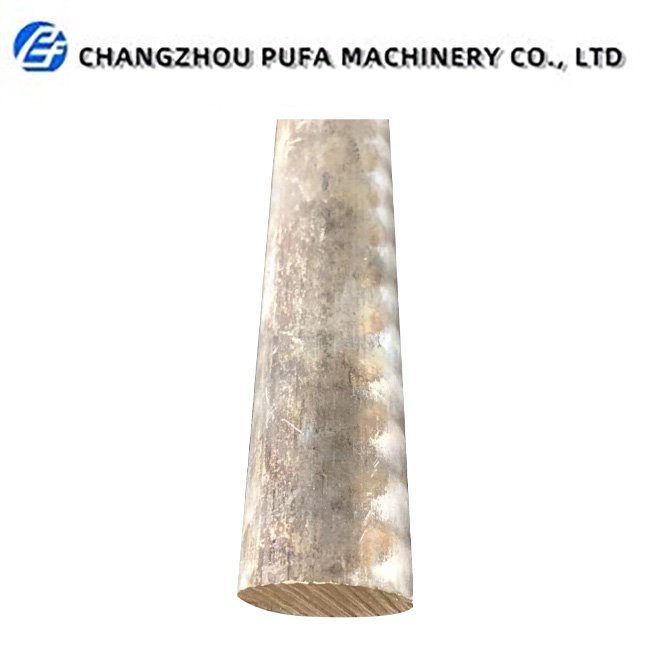
As a Phosphor Bronze supplier, I'm always here to help you choose the right grade and processing method for your needs. If you're interested in learning more about our Alloy Phosphor Bronze Rod or other Phosphor Bronze products, or if you have any questions about improving the strength of Phosphor Bronze, feel free to reach out to me. We can have a detailed discussion and find the best solution for your project.
References
- ASM Handbook, Volume 4: Heat Treating
- Metals Handbook Desk Edition, Third Edition
- "The Physical Metallurgy of Copper and Its Alloys" by H. K. D. H. Bhadeshia and R. W. Cahn