

What is Tin Bronze
Tin bronzes are copper alloys primarily composed of copper and tin, with other alloying elements such as phosphorus and zinc for enhanced properties. Tin bronzes are known for their improved hardness compared to pure copper, fatigue resistance, and wear resistance. The "tin" in "tin bronze" refers to the major alloying element in traditional bronze. When combined with copper, tin imparts desirable mechanical and physical characteristics to the alloy, making it valuable in various applications.
Benefits of Tin Bronze
High strength
Tin bronze has high strength and can withstand large forces, so it is widely used in manufacturing various mechanical parts and tools. At the same time, its tensile strength and yield strength are much higher than pure copper.
Good corrosion resistance
Tin bronze has good corrosion resistance and can maintain its performance in a humid environment for a long time. Therefore, it is often used to manufacture equipment and parts in various fields such as ships, marine engineering, chemical industry, and electronic industry.
Good weldability
Tin bronze has good weldability and can be processed in various welding and connection methods without damaging its mechanical properties. This makes the processing and joining of tin bronze during the manufacturing process easier and faster.
Good hardness
Tin bronze has a very high hardness, harder than pure copper, and has strong wear resistance. It is suitable for manufacturing various gears, bearings, friction plates and other wear-resistant parts. Its high hardness can also improve the fatigue resistance of products and avoid product failure due to fatigue damage.
Good malleability
Tin bronze has good forgeability and can enhance its strength and hardness through processes such as forging and quenching, while improving its processing performance, allowing it to better adapt to the manufacturing needs of various complex shapes.
Good wear resistance
Tin bronze is widely used to manufacture various wear-resistant parts due to its high hardness and strong wear resistance. It can still maintain its performance in severe wear environments. This makes tin bronze of great application value in industrial production.
-

Bronze Round Bar
This product has good load capacity and good machinability, very suitable for various Various Add to Inquiry -
UNS C83600 Alloy
UNS C83600 alloy is a leaded red brass copper casting alloy. Main ingredients: Copper (Cu) as the Add to Inquiry -
PB1 Copper Tin
PB1 is a widely used continuously cast Phosphor Bronze containing 10-12% tin. PB1 Copper-Tin Add to Inquiry -
LG1 Grade Bronze Rod
CC490K/LG1 Grade Bronze Rod is a leaded gunmetal a reasonable strength and good corrosion Add to Inquiry -
CuSn11P-C CC481K SAE65 C90710 Bronze Tube
CC481K bronze is a bronze formulated for casting. Cited properties are appropriate for the Add to Inquiry -
Tin Bronze Sheet Metal
Tin bronze sheet metal has a wide range of applications in the industrial field. For example, in Add to Inquiry -
Bronze Solid Round Bar
The Bronze Solid Round Bar in which tin is the principal alloying element. The tin content of the Add to Inquiry -
Lead Tin Bronze Rod
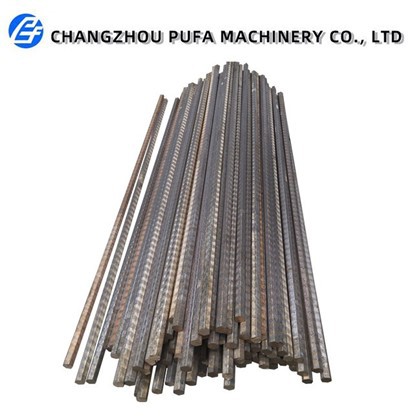
Pufa machinery supply high quality Lead Tin Bronze Rods, hexagonal tin bronze rods, square tin Add to Inquiry -
High Leaded Tin Bronze Hollow Bar
Tin Bronze Hollow Bar is our main product, we make around 70 tons of tin bronze bars per month. Add to Inquiry -
Tin Bronze Solid Bar
Tin bronze bar in which tin is the principal alloying element. The tin content of the Tin Bronze Add to Inquiry -
High Tin Bronze Alloy
Tin bronze alloy is a bronze with tin as the main alloying element. It has many excellent Add to Inquiry -
Leaded Bronze Alloys
The alloy leaded tin bronze resists wear well. Since our establishment in 1986, Pufa machinery have Add to Inquiry





Why Choose Us
Competitive prices
We offer our products at competitive prices, making them affordable for our customers. We believe that high-quality products should not come at a premium, and we strive to make our products accessible to all.
Rich experience
Has a long-standing reputation in the industry, which makes it stand out from its competitors. With over many years of experience, they have developed the skills necessary to meet their clients' needs.
Efficient and convenient
The company has established marketing networks around the world to provide high-quality services to customers in an efficient and convenient manner.
Quality assurance
In terms of quality assurance, the company strictly follows the standards and norms of the industry quality system. Adopt industry-leading testing equipment to ensure product quality and good reputation.
Professional service
We can accept factory inspection and goods inspection at any time. Technical discussion, research and development of new products, and complete after-sales service.
High quality products
We always put customer needs and expectations in the first place, refine on, continuous improvement, to seek every opportunity to do better, to provide customers with their expectations of quality products, to provide customers with the most satisfactory service at anytime.

How Are Tin Bronzes Made
Tin bronzes, alloys of copper and tin, are produced by incorporating cassiterite (an ore-rich tin oxide, SnO2) into molten metallic copper. In a controlled process, this recipe would yield approximately 55 grams of metallic copper, melted at 1090 °C. Subsequently, 5 grams of cassiterite, along with charcoal, are introduced into the crucible. This addition facilitates the extraction of tin from the ore and its amalgamation with copper. The resulting alloy exhibits enhanced strength, corrosion resistance, and a distinctive bronze hue.
Melted bronze is continuously cast by putting it into a crucible fitted with a water-cooled die and measuring the diameter of the finished result by gradually withdrawing it using a roller mechanism. Once a particular block or billet is started, wrought bronze is usually formed using rolling, extrusion, or forging mills. Melting bronze into hollow molds is the method used in bronze casting processes (lost wax, ceramic shell, sand casting) to manufacture a variety of artifacts, including: instruments, medals, and sculptures.
Composition of Tin Bronze
Tin bronze is a class of copper-based alloys traditionally alloyed with tin, typically containing about 12–12.5% tin. Adding a small amount (0.01-0.45) of phosphorus further improves hardness, fatigue resistance and wear resistance. The addition of these alloys can be used in applications such as springs, fasteners, masonry fixtures, shafts, valve shafts, gears and bearings. Bronze is also the metal of choice for bells, in the form of a high-tin bronze alloy, commonly known as bell metal, with a tin content of approximately 23%. High-tin bronze alloys are also commonly used in gear and high-strength bushing and bearing applications where high strength and heavy loads are present. Other applications for these alloys include pump impellers, piston rings and steam fittings. Copper casting alloy UNS C90500 is a casting alloy of copper and tin, also known as gun metal. Originally used primarily to make guns, it has now mostly been replaced by steel.


How Does Tin Bronze Differ From Other Types of Bronze
Tin bronze differs from other types of bronzes because it has a large proportion of tin in its composition. On the other hand, silicon bronze has 2.8–4% silicon, while aluminum bronze contains 9–14% aluminum and 4% iron. Tin bronze performs exceptionally well against corrosion, while aluminum bronze outperforms it in terms of strength and wear resistance.
Tribological Behaviour of Tin Bronze Alloys Produced by Different Casting Techniques
In this study the hardness and wear resistance behaviour of tin bronze alloys produced by die and sand mould casting were investigated. The alloying element (Sb) was added with percentage of (3,5 and 8) wt. % to tin bronze alloys. The wear tests were performed using a pin on disc. The applied load was (10, 20, 30) N, rotational speed was constant equal to 250 rpm and the time (5,10,15) minute. Results were evaluated using losses in weight. Every worn surface was tested by SEM and the wear properties of bronze materials are discussed. It was concluded that CuSn12 material produced by die mold casting technique had higher hardness than the material produced by sand mold casting technique, due to rapid cooling, also after the wear test, wear loss of CuSn12 alloy produced by die mould casting technique was lower due to its higher hardness. In addition to the hardness for tin bronze + 8 wt% Sn increased by 24.8 % for sand casting and 26.7 % for die casting. The results of scanning electron microscopy of worn surface were characterized by wear grooves run parallel to the sliding direction, removes the particles, smearing of Sn phase and plastic deformation. In addition to increasing in the rate of antimony an improvement in the in the wear track, where the rate of deformation and cracks decreases, especially when increasing Sb up to 8%.
What Is the Color of Tin Bronze
Tin bronze exhibits a metallic brown color. The exact shade is a result of the ratio of copper to tin. This distinctive hue enhances its aesthetic appeal and makes it recognizable in various applications. Bronzes with greater levels of tin have lighter shades. Aluminum, manganese, and nickel additives influence the final product's color when mixed with the original alloy in metal manufacturing.
Tin Bronze Applications
Tin bronze is a versatile alloy with excellent mechanical properties and corrosion resistance that can be used in a wide range of industries. This high-strength alloy is valued for its suitability in high-load, low-speed situations, making it ideal for applications such as gear manufacturing, bushings, bearings and pump impellers. In addition to mechanical properties, it is used in critical components such as piston rings, steam fittings and valve bodies where durability and reliability are critical. Its adaptability extends to the electrical field, with applications in connectors, relays and conductor springs. Tin bronze alloys are available in custom compositions to meet a variety of specific needs, making them the first choice for a variety of industrial environments.

Tin Bronze Market Size Report
Tin bronze, in the field of metallurgy, refers to an alloy mainly composed of copper, tin and various trace elements. Known for its exceptional strength, corrosion resistance and ductility, tin bronze has a wide range of applications across a variety of industries. Its definition includes nonferrous alloys in which the addition of tin to copper enhances mechanical properties as well as resistance to wear and corrosion. The alloy's unique composition gives it properties that make it an integral material for manufacturing bearings, bushings, gears and complex components in applications where durability and reliability are critical. The tin bronze market is closely linked to the demand for high-performance materials in sectors such as automotive, aerospace and marine engineering.
Opportunities in the tin bronze market are expected to grow due to the versatility and adaptability of tin bronze alloys in emerging technological areas. As industries continue to prioritize efficiency, tin bronze is a key material that fosters innovation. Growing demand for advanced engineering solutions coupled with surge in infrastructure development projects provides a strong market landscape for tin bronze. The alloy's use in electrical connectors and electronic components further amplifies opportunities, driven by growing demand from the electronics industry. The market segmentation is very granular and covers end-use industries such as automotive, marine, aerospace, and electrical applications. Regional differences in demand contribute to the dynamism of the market, as manufacturers strategically position themselves to meet specific industrial needs. This segmentation enables stakeholders to strategize based on the different needs of different industries, thereby promoting sustainable growth of the tin bronze market.

How Does Tin Bronze Differ From Other Types of Bronze
Tin bronze differs from other types of bronze because it contains a large amount of tin in its composition. Silicon bronze, on the other hand, contains 2.8-4% silicon, while aluminum bronze contains 9-14% aluminum and 4% iron. Tin bronze has excellent corrosion resistance, while aluminum bronze outperforms it in strength and wear resistance.
Our Factory
Changzhou pufa machinery co., LTD, established in 1986, is a professional copper alloy manufacturer which specializes in casting, extrusion and finish machining. After more than 30 years of development, our company is now covering an area of more than 20,000 square meters and have 120 employees.

video
Certifications

FAQ
We're well-known as one of the leading tin bronze suppliers in China since 1986, featured by quality products and competitive price. Please feel free to wholesale custom tin bronze made in China here from our factory. For OEM service, contact us now.
BC6 Bronze, Tin Bronze Rods, oil filled bronze bush