

Hey there! As a supplier of BC3 Bronze, I've got a ton of knowledge about this amazing material, especially when it comes to its heat - treatment processes. Let's dive right in and explore the common heat - treatment processes for BC3 Bronze.
First off, what is BC3 Bronze? Well, it's a type of bronze alloy that has unique properties, making it suitable for various applications. If you're interested in related bronze alloys, you can check out Leaded Tin Bronze Alloy, Tin Bronze C90300, and Copper Nickel Tin Bronze.
One of the most common heat - treatment processes for BC3 Bronze is annealing. Annealing is like giving the bronze a nice, relaxing spa treatment. It involves heating the BC3 Bronze to a specific temperature and then slowly cooling it down. This process helps to relieve internal stresses that might have built up during manufacturing, like casting or forging. When we heat the bronze, the atoms in the material start to move around more freely. As we cool it slowly, the atoms arrange themselves in a more stable and uniform way. This results in a more ductile and workable material. For BC3 Bronze, annealing can improve its machinability, which is super important if you're planning to shape it into different parts.

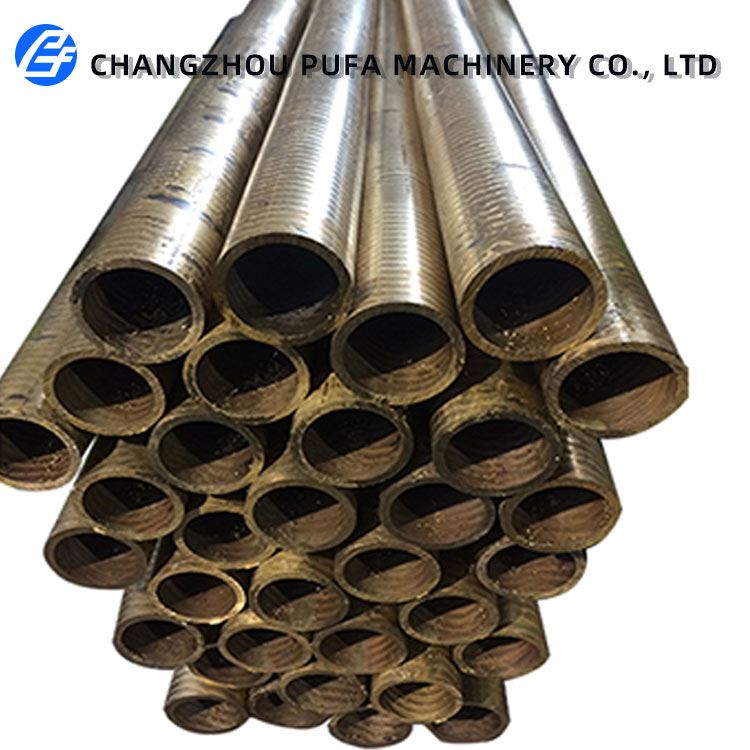
The temperature for annealing BC3 Bronze usually ranges from 550°C to 700°C. The exact temperature depends on a few factors, such as the composition of the alloy and the specific properties you're looking for. After reaching the right temperature, we keep the bronze at that temperature for a certain period of time, called the soaking time. This allows the heat to penetrate evenly throughout the material. Then, we start the slow cooling process. We can do this in the furnace itself, or sometimes we use other methods to control the cooling rate.
Another important heat - treatment process is quenching. Quenching is the complete opposite of annealing in terms of the cooling speed. In quenching, we heat the BC3 Bronze to a high temperature, usually above 700°C, and then rapidly cool it down by plunging it into a quenching medium, like water, oil, or a polymer solution. This rapid cooling creates a hard and strong surface on the bronze. The fast cooling rate prevents the atoms from rearranging themselves into a more stable structure, resulting in a supersaturated solid solution. This makes the BC3 Bronze much harder, but it also makes it more brittle.
Quenching is often used when we need the BC3 Bronze to have high strength and wear resistance. For example, if we're making parts that will be subjected to a lot of friction and wear, like gears or bearings, quenching can be a great option. However, because quenching can make the bronze brittle, we usually follow it up with another process called tempering.
Tempering is a post - quenching process that helps to reduce the brittleness caused by quenching. After quenching the BC3 Bronze, we heat it to a lower temperature, typically between 150°C and 400°C. We hold it at this temperature for a period of time and then cool it down. Tempering allows some of the internal stresses to be relieved and restores a certain amount of ductility to the material. It's like finding a balance between the hardness achieved by quenching and the ductility we need for practical use. This way, the BC3 Bronze can still have good strength and wear resistance while being less likely to crack or break under stress.
Precipitation hardening is another heat - treatment process that can be used for BC3 Bronze. This process is based on the principle of forming small, hard particles, called precipitates, within the bronze matrix. First, we heat the BC3 Bronze to a high temperature to dissolve certain alloying elements in the solid solution. Then, we quench the bronze to lock these elements in a supersaturated state. After that, we heat the bronze to a lower temperature, usually around 300°C to 500°C, and hold it there for a long time. During this time, the dissolved elements start to come out of the solid solution and form tiny precipitates. These precipitates act like little pins, preventing the movement of dislocations in the material, which increases the strength and hardness of the BC3 Bronze.
Precipitation hardening is often used when we need a combination of high strength and good corrosion resistance. BC3 Bronze parts that have undergone precipitation hardening can be used in marine applications, where they'll be exposed to saltwater and other corrosive environments.
Normalizing is also a common heat - treatment process for BC3 Bronze. Normalizing is similar to annealing in terms of the heating process, but the cooling rate is different. We heat the BC3 Bronze to a temperature above the critical point, usually around 750°C to 850°C, and then cool it in air. This results in a more uniform grain structure compared to as - cast or as - forged BC3 Bronze. Normalizing can improve the mechanical properties of the bronze, such as its tensile strength and impact toughness. It also helps to refine the grain size, which can enhance the overall quality of the material.
Now, you might be wondering how we choose the right heat - treatment process for BC3 Bronze. Well, it all depends on the specific application of the material. If you're making decorative items, annealing might be the best option because you want a more workable and ductile material. On the other hand, if you're making parts for heavy - duty machinery, quenching and tempering could be more suitable to get the high strength and wear resistance you need.
As a BC3 Bronze supplier, I know that choosing the right heat - treatment process is crucial for getting the best performance out of the material. We work closely with our customers to understand their needs and recommend the most appropriate heat - treatment process. Whether you're in the automotive industry, the aerospace industry, or any other field that uses BC3 Bronze, we've got the expertise to help you make the most of this amazing alloy.
If you're interested in purchasing BC3 Bronze or need more information about the heat - treatment processes, don't hesitate to get in touch. We're always here to assist you with your procurement needs and answer any questions you might have. Let's work together to find the perfect BC3 Bronze solution for your projects!
References:
- "Metallurgy for Engineers" by John D. Verhoeven
- "Heat Treatment of Metals" by George E. Totten and Larry C. West