

What is the density of a solid bronze bar? Well, that's a question I get asked a lot as a solid bronze bar supplier. Let's dive right in and break this down.
First off, bronze is an alloy - that means it's made up of more than one metal. Usually, it's mainly copper and tin, but there can be other elements thrown in too, like lead, zinc, or nickel. And the density of a solid bronze bar can vary depending on what exactly is in that alloy.
The basic density of pure copper is about 8.96 g/cm³, and pure tin is around 7.31 g/cm³. But when you mix them to make bronze, the density changes. A common type of bronze, which is about 88% copper and 12% tin (by weight), has a density of roughly 8.8 g/cm³. This is a good ballpark figure, but it's important to note that different bronze alloys can have different densities.
For example, Leaded Bronze Alloys are a type of bronze where lead is added. Lead has a relatively high density of 11.34 g/cm³. So, when you add lead to a bronze alloy, it can increase the overall density of the solid bronze bar. These leaded bronze alloys are often used because lead improves the machinability of the bronze. That means it's easier to cut, shape, and form into the desired product.

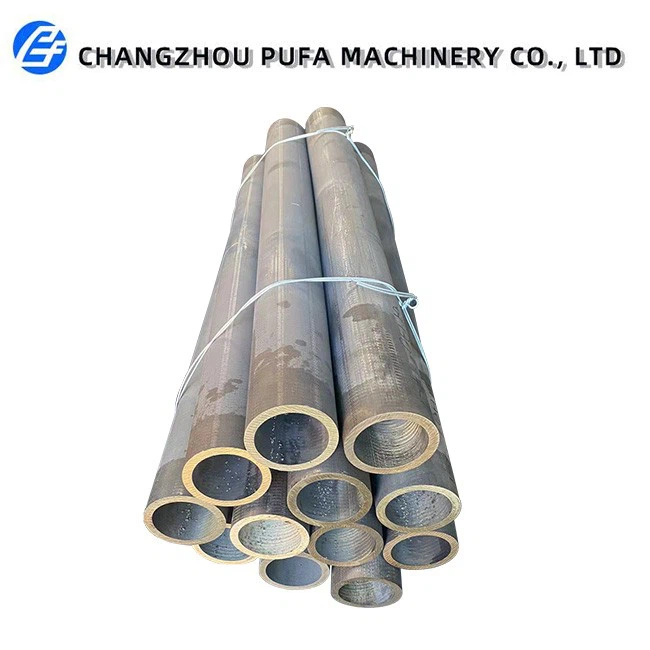
Another type is Leaded Tin Bronze. As the name suggests, it has both lead and tin in the copper base. The addition of lead and tin can change the density based on their proportions in the alloy. Leaded tin bronze is known for its good wear resistance and is often used in applications like bearings and bushings.
LG2 Bronze is also a specific type of bronze alloy. Its density will depend on its exact chemical composition. LG2 bronze is often used in engineering applications due to its combination of strength, corrosion resistance, and good mechanical properties.
Now, why does the density of a solid bronze bar matter? Well, if you're in the business of using bronze bars for manufacturing, knowing the density is crucial for calculating weight. For instance, if you're designing a structure that uses bronze bars, you need to know how much weight those bars will add to the overall structure. Also, in shipping and logistics, the weight (which is related to density) affects the cost of transporting the bronze bars.
Let's say you're making a small decorative piece out of a solid bronze bar. You need to know the density to figure out how much material you'll need and how much it will weigh. If you're making a large - scale industrial part, the density becomes even more important for engineering calculations.
When it comes to measuring the density of a solid bronze bar, there are a few ways to do it. One common method is the Archimedes' principle. You measure the mass of the bar using a scale, and then you measure the volume by submerging the bar in water and measuring the volume of water displaced. Then, you use the formula density = mass/volume.
In our supply business, we test the density of our bronze bars regularly to ensure quality. We want to make sure that our customers are getting exactly what they expect in terms of the alloy composition and the corresponding density.
If you're in the market for solid bronze bars, you might be wondering where to start. We've been in the business for a long time, and we understand the different needs of our customers. Whether you need a specific type of bronze alloy like leaded bronze, leaded tin bronze, or LG2 bronze, we can help.
We source our bronze from high - quality suppliers and use advanced manufacturing processes to produce solid bronze bars of the highest quality. Our bars come in various sizes and shapes, and we can even customize them according to your requirements.
If you're interested in learning more about our solid bronze bars, or if you have specific questions about density, alloy composition, or any other aspect, don't hesitate to reach out. We're here to help you make the right choice for your project. Whether you're a small - scale artist or a large - scale industrial manufacturer, we can provide you with the bronze bars you need.
In conclusion, the density of a solid bronze bar is an important characteristic that can vary depending on the alloy composition. Different types of bronze alloys like leaded bronze alloys, leaded tin bronze, and LG2 bronze have different densities due to the presence of different elements. As a reliable solid bronze bar supplier, we're committed to providing high - quality products and excellent customer service. So, if you're looking for solid bronze bars, get in touch with us, and let's start a conversation about your needs.
References
- Materials Science textbooks
- Industry reports on bronze alloys