

Elongation is a critical mechanical property that measures the ability of a material to deform plastically before fracture. In the context of bronze round bars, understanding elongation is essential for assessing their performance in various applications. As a supplier of high - quality bronze round bars, I am well - versed in the intricacies of this property and its implications.
What is Elongation?
Elongation is defined as the increase in length of a material when it is subjected to tensile stress, expressed as a percentage of its original length. When a bronze round bar is pulled at its ends, it will initially deform elastically, meaning it will return to its original shape once the stress is removed. However, as the stress increases, the bar enters the plastic deformation stage. In this stage, the bar will not fully recover its original shape, and the permanent increase in length is what we measure as elongation.
The formula for calculating elongation is:
[ \text{Elongation}(%)=\frac{L_f - L_0}{L_0}\times100% ]
where (L_0) is the original length of the specimen and (L_f) is the final length after fracture.
Factors Affecting the Elongation of Bronze Round Bars
Chemical Composition
The chemical composition of bronze has a significant impact on its elongation. Bronze is an alloy primarily composed of copper and tin, with other elements such as phosphorus, zinc, and lead added in varying amounts. For example, Tin Bronze C90300 has a specific chemical makeup that gives it certain mechanical properties, including elongation. The presence of tin in bronze generally increases its strength but can also reduce its ductility if the tin content is too high. Phosphorus is often added to improve the fluidity and deoxidation during casting, and it can also have an effect on the microstructure and thus the elongation of the bronze.
Microstructure
The microstructure of bronze, which includes the grain size, phase distribution, and presence of any inclusions, plays a crucial role in determining its elongation. A fine - grained microstructure typically results in better ductility and higher elongation. This is because fine grains provide more grain boundaries, which can impede the movement of dislocations and allow for more uniform deformation. Heat treatment processes can be used to modify the microstructure of bronze round bars. For instance, annealing can refine the grain structure and improve the elongation of the bars.

Manufacturing Process
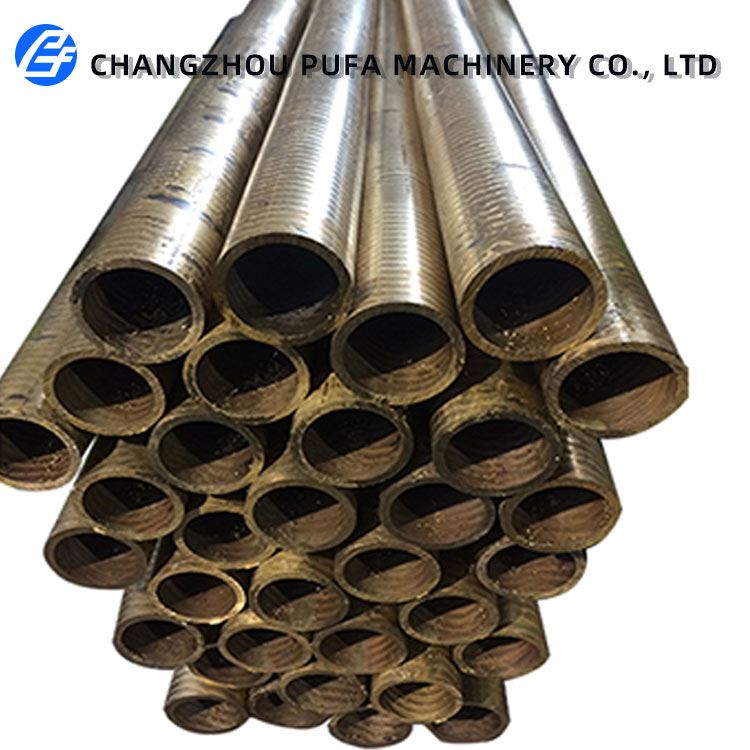
The manufacturing process of bronze round bars also affects their elongation. Casting, for example, can introduce defects such as porosity, shrinkage cavities, and inclusions, which can reduce the elongation of the bars. On the other hand, extrusion and forging processes can improve the mechanical properties of bronze by aligning the grains and reducing internal defects. The CuSn11P - C CC481K SAE65 C90710 Bronze Tube is manufactured using advanced processes to ensure high - quality and good mechanical properties, including appropriate elongation.
Importance of Elongation in Applications
Structural Applications
In structural applications, the elongation of bronze round bars is crucial for ensuring the safety and reliability of the structure. When a structure is subjected to external loads, the bronze bars need to be able to deform plastically to some extent without fracturing. This ability to absorb energy through plastic deformation can prevent sudden and catastrophic failure. For example, in architectural structures or machinery components, bronze round bars with sufficient elongation can withstand dynamic loads and vibrations.
Machining and Forming
During machining and forming processes, the elongation of bronze round bars is important for achieving the desired shape without cracking or breaking. If a bronze bar has low elongation, it may crack during bending, threading, or other forming operations. On the other hand, bars with high elongation can be easily formed into complex shapes, which is beneficial for industries such as jewelry making and precision engineering.
Measuring Elongation
The elongation of bronze round bars is typically measured using a tensile test. In a tensile test, a specimen of the bronze bar is placed in a testing machine, and a gradually increasing tensile force is applied until the specimen fractures. The original and final lengths of the specimen are measured, and the elongation is calculated using the formula mentioned above. Standard test methods, such as ASTM E8 for metallic materials, provide guidelines for conducting tensile tests and ensuring accurate and consistent results.
Elongation of Different Types of Bronze Round Bars
Different types of bronze round bars have different elongation properties. For example, C90700 Tin Bronze Bar has its own characteristic elongation value based on its chemical composition and manufacturing process. Generally, the elongation of bronze round bars can range from around 10% to 40%, depending on the specific type of bronze and the conditions under which it is tested.
Our Offerings as a Bronze Round Bar Supplier
As a supplier of bronze round bars, we understand the importance of elongation and other mechanical properties for our customers. We offer a wide range of bronze round bars with different chemical compositions and specifications to meet the diverse needs of various industries. Our bars are manufactured using high - quality raw materials and advanced production techniques to ensure consistent and reliable mechanical properties, including appropriate elongation.
We have a strict quality control system in place to ensure that each bronze round bar we supply meets the required standards. Our team of experts is available to provide technical support and advice on selecting the right bronze round bar for your specific application, taking into account factors such as elongation, strength, and corrosion resistance.
Conclusion
Elongation is a vital property of bronze round bars that affects their performance in a wide range of applications. By understanding the factors that influence elongation, such as chemical composition, microstructure, and manufacturing process, customers can make informed decisions when selecting bronze round bars. As a supplier, we are committed to providing high - quality bronze round bars with the appropriate elongation properties to meet the needs of our customers.
If you are interested in purchasing bronze round bars or have any questions about their elongation or other properties, please feel free to contact us for a detailed discussion and procurement negotiation.
References
- ASTM International. (Year). ASTM E8 - Standard Test Methods for Tension Testing of Metallic Materials.
- Metals Handbook Committee. (Year). Metals Handbook: Properties and Selection: Nonferrous Alloys and Pure Metals. ASM International.