

The friction coefficient is a fundamental parameter in materials science and engineering, especially when it comes to understanding the tribological behavior of materials. As a supplier of Aluminum Bronze, I often receive inquiries about the friction coefficient of this remarkable alloy. In this blog post, I will delve into the concept of the friction coefficient, explore what it means for Aluminum Bronze, and discuss its implications in various applications.
Understanding the Friction Coefficient
Before we dive into the specifics of Aluminum Bronze, let's first understand what the friction coefficient is. Friction is the force that resists the relative motion between two surfaces in contact. The friction coefficient, denoted as μ, is a dimensionless quantity that represents the ratio of the frictional force (F) to the normal force (N) pressing the two surfaces together. Mathematically, it can be expressed as:
μ = F / N
There are two main types of friction coefficients: static and kinetic. The static friction coefficient (μs) applies when the two surfaces are at rest relative to each other, and it represents the maximum force required to initiate motion. The kinetic friction coefficient (μk), on the other hand, applies when the surfaces are in motion relative to each other. In general, μs is greater than μk, meaning it takes more force to start an object moving than to keep it moving.
Friction Coefficient of Aluminum Bronze
Aluminum Bronze is a copper-based alloy that contains aluminum as the primary alloying element, along with other elements such as iron, nickel, and manganese. This alloy is known for its excellent mechanical properties, including high strength, good corrosion resistance, and wear resistance. The friction coefficient of Aluminum Bronze depends on several factors, including the composition of the alloy, the surface finish of the material, the contact pressure, and the sliding speed.
Typically, the friction coefficient of Aluminum Bronze ranges from 0.1 to 0.4. This relatively low friction coefficient makes it an ideal material for applications where low friction and wear resistance are required. For example, in bearings and bushings, Aluminum Bronze can reduce friction and wear, leading to longer service life and improved efficiency. In addition, its low friction coefficient also makes it suitable for applications in high-speed machinery, where reducing friction can help to minimize energy consumption and heat generation.
Factors Affecting the Friction Coefficient of Aluminum Bronze
Alloy Composition
The composition of Aluminum Bronze plays a crucial role in determining its friction coefficient. Different alloying elements can have different effects on the friction behavior of the material. For example, the addition of iron and nickel can increase the hardness and strength of the alloy, which can in turn reduce the friction coefficient. On the other hand, the presence of certain impurities or inclusions can increase the friction coefficient and lead to increased wear.
Surface Finish
The surface finish of Aluminum Bronze also has a significant impact on its friction coefficient. A smooth surface finish can reduce the contact area between the two surfaces, which can lead to a lower friction coefficient. In contrast, a rough surface finish can increase the contact area and the friction force. Therefore, it is important to ensure that the surface of Aluminum Bronze is properly finished to achieve the desired friction properties.
Contact Pressure
The contact pressure between the two surfaces in contact can also affect the friction coefficient of Aluminum Bronze. As the contact pressure increases, the friction coefficient generally decreases up to a certain point. However, if the contact pressure is too high, it can cause plastic deformation of the material, which can increase the friction coefficient and lead to increased wear.
Sliding Speed
The sliding speed between the two surfaces in contact is another important factor that affects the friction coefficient of Aluminum Bronze. At low sliding speeds, the friction coefficient is relatively constant. However, as the sliding speed increases, the friction coefficient may decrease due to the formation of a lubricating film on the surface of the material. At very high sliding speeds, the friction coefficient may increase again due to the generation of heat and the breakdown of the lubricating film.
Applications of Aluminum Bronze Based on its Friction Coefficient
Bearings and Bushings
As mentioned earlier, Aluminum Bronze's low friction coefficient makes it an excellent material for bearings and bushings. In these applications, the alloy can reduce friction and wear, leading to longer service life and improved efficiency. For example, in automotive engines, Aluminum Bronze bearings can withstand high loads and speeds, while providing smooth and reliable operation.
Gears
Gears are another application where Aluminum Bronze's low friction coefficient is beneficial. In gear systems, the low friction coefficient can reduce power losses and noise, while improving the overall efficiency of the system. Aluminum Bronze gears are commonly used in industrial machinery, marine applications, and aerospace equipment.

Valves and Pump Components
In valves and pump components, Aluminum Bronze's low friction coefficient and excellent corrosion resistance make it an ideal material. The low friction coefficient allows for smooth operation of the valves and pumps, while the corrosion resistance ensures long-term reliability in harsh environments. For example, in seawater applications, Aluminum Bronze valves and pump components can resist corrosion and erosion, providing reliable performance over an extended period.
Our Aluminum Bronze Products
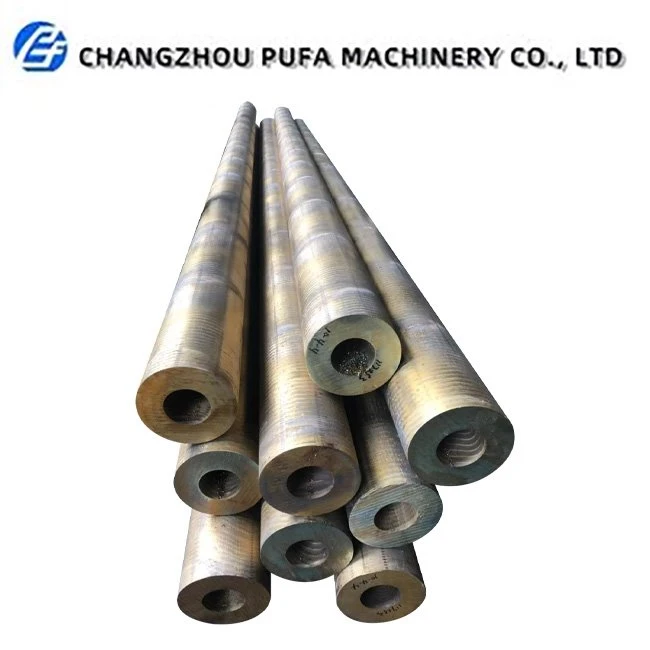
As a supplier of Aluminum Bronze, we offer a wide range of products to meet the diverse needs of our customers. Our products include Copper Alloy Aluminum Bronze Rod, Aluminium Bronze C63000 Bars, and Aluminum Bronze Hollow Bars. These products are available in various sizes and specifications, and we can also customize them according to your specific requirements.
Conclusion
The friction coefficient of Aluminum Bronze is an important parameter that affects its performance in various applications. With its relatively low friction coefficient, Aluminum Bronze offers excellent wear resistance and low friction, making it suitable for a wide range of applications, including bearings, bushings, gears, valves, and pump components. As a supplier of Aluminum Bronze, we are committed to providing high-quality products and excellent customer service. If you are interested in our Aluminum Bronze products or have any questions about the friction coefficient or other properties of Aluminum Bronze, please feel free to contact us for procurement and further discussions.
References
- ASM Handbook Volume 2: Properties and Selection: Nonferrous Alloys and Special-Purpose Materials. ASM International.
- Callister, W. D., & Rethwisch, D. G. (2011). Materials Science and Engineering: An Introduction. Wiley.
- Metals Handbook Desk Edition, Third Edition. ASM International.