

Wear resistance is a crucial property when it comes to materials used in various industrial applications, and bronze round bars are no exception. As a supplier of high - quality bronze round bars, I have witnessed firsthand the importance of wear resistance in ensuring the longevity and performance of these products. In this blog, we will delve into what the wear resistance of a bronze round bar is, the factors that influence it, and how it impacts different applications.
Understanding Wear Resistance
Wear resistance refers to a material's ability to withstand the damaging effects of friction, abrasion, erosion, and other mechanical forces that cause the removal of material from its surface over time. When a bronze round bar has good wear resistance, it can maintain its shape, dimensions, and surface integrity even under conditions of repeated contact or relative motion against other surfaces.
Wear can occur in several forms, such as adhesive wear, abrasive wear, fatigue wear, and erosive wear. Adhesive wear happens when two surfaces in contact adhere to each other and material is transferred from one surface to the other. Abrasive wear is caused by hard particles rubbing against the surface, which can cut or plow away material. Fatigue wear results from repeated stress cycles that lead to crack initiation and propagation on the surface. Erosive wear is due to the impact of fluid - borne particles on the surface.
Factors Affecting the Wear Resistance of Bronze Round Bars
Alloy Composition
One of the most significant factors influencing the wear resistance of bronze round bars is their alloy composition. Bronze is an alloy primarily composed of copper and tin, but other elements can be added to enhance specific properties. For example, Alloy Tin Bronze often contains small amounts of other metals like lead, zinc, and phosphorus.

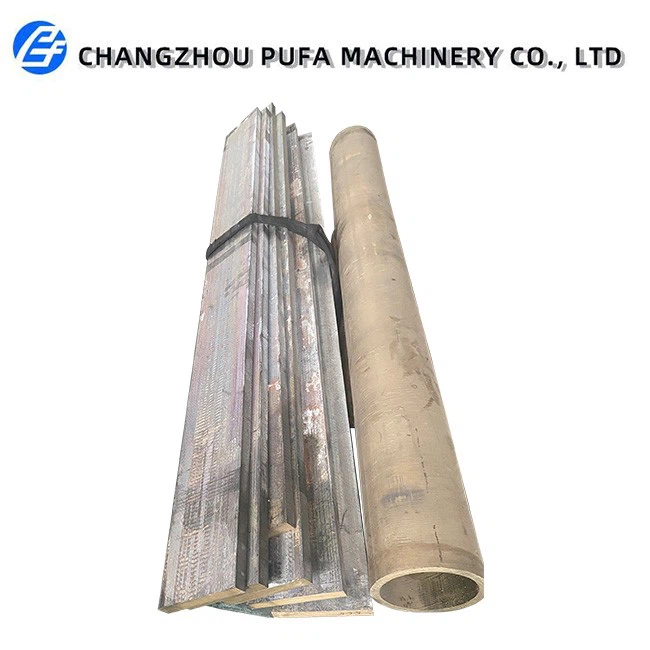
Lead can improve the machinability and lubricity of the bronze, which in turn can enhance its wear resistance by reducing friction between the contacting surfaces. Zinc can increase the strength and hardness of the alloy, contributing to better wear resistance, especially in applications where high - load conditions are present. Phosphorus can refine the grain structure of the bronze, making it more resistant to wear and corrosion.
Microstructure
The microstructure of a bronze round bar also plays a vital role in its wear resistance. A fine - grained microstructure generally provides better wear resistance compared to a coarse - grained one. Fine grains offer more grain boundaries, which act as barriers to the movement of dislocations and the propagation of cracks. This means that the material can better withstand the forces of wear, as the fine - grained structure can distribute the stress more evenly across the surface.
Heat treatment processes can be used to modify the microstructure of bronze round bars. Annealing, for example, can relieve internal stresses and refine the grain structure, thereby improving wear resistance. Quenching and tempering can also be employed to achieve specific hardness and toughness levels, which are critical for optimizing wear performance.
Surface Finish
The surface finish of a bronze round bar has a direct impact on its wear resistance. A smooth surface finish reduces the contact area between the bar and the mating surface, which in turn reduces friction and the likelihood of abrasive wear. Rough surfaces, on the other hand, can trap debris and particles, increasing the risk of wear.
During the manufacturing process, various finishing operations such as grinding, polishing, and lapping can be applied to achieve the desired surface finish. These operations not only improve the wear resistance of the bronze round bar but also enhance its aesthetic appearance.
Operating Conditions
The wear resistance of a bronze round bar is also affected by the operating conditions in which it is used. Factors such as load, speed, temperature, and the presence of lubricants all play a role.
Under high - load conditions, the material is subjected to greater stresses, which can accelerate wear. The speed of relative motion between the bronze round bar and the mating surface can also influence wear. Higher speeds can generate more heat due to friction, which can change the material's properties and increase the rate of wear. Temperature can also have a significant impact, as elevated temperatures can cause softening of the material, reducing its wear resistance.
Lubrication is an effective way to reduce wear. A lubricant can form a thin film between the contacting surfaces, separating them and reducing friction. This not only decreases the wear rate but also helps to dissipate heat generated during operation.
Applications of Wear - Resistant Bronze Round Bars
Bearings and Bushings
Bronze round bars with high wear resistance are commonly used in the manufacturing of bearings and bushings. In these applications, the round bars are machined into the desired shape and size to provide a smooth and durable surface for the rotating or sliding parts. The wear - resistant properties of the bronze ensure that the bearings and bushings can withstand the high loads and continuous motion without excessive wear, which is essential for the reliable operation of machinery.
Gears
Gears are another important application where wear - resistant bronze round bars are utilized. Gears transmit power by meshing with each other, and the teeth of the gears are subjected to significant forces and friction. A bronze round bar with good wear resistance can maintain the integrity of the gear teeth over time, ensuring accurate transmission of power and smooth operation.
Valve Components
In the valve industry, wear - resistant bronze round bars are used to manufacture various components such as stems, discs, and seats. These components are often in contact with the flowing fluid and are subject to abrasion and erosion. The high wear resistance of bronze helps to prevent leakage, maintain the tightness of the valve, and ensure its long - term performance.
Our Offerings
As a supplier of bronze round bars, we offer a wide range of products with excellent wear resistance. Our Lead Tin Bronze Hollow Bar is designed for applications where both light weight and wear resistance are required. The addition of lead in the alloy provides better machinability and lubricity, enhancing the overall wear performance of the bar.
We also supply Tin Bronze Sheet & Plate, which can be used in combination with our round bars to create complex components. These sheets and plates are known for their high strength, corrosion resistance, and wear resistance, making them suitable for a variety of industrial applications.
Contact Us for Procurement
If you are looking for high - quality bronze round bars with exceptional wear resistance for your specific application, we would be delighted to discuss your requirements. Our team of experts is on hand to provide you with detailed product information, technical support, and competitive pricing. Whether you need a small quantity for a prototype or a large - scale order for mass production, we can meet your needs.
References
- Askeland, D. R., & Wright, W. J. (2012). The Science and Engineering of Materials. Cengage Learning.
-ASM Handbook Committee. (2004). ASM Handbook, Volume 4: Heat Treating. ASM International. - Dieter, G. E. (1986). Mechanical Metallurgy. McGraw - Hill.