

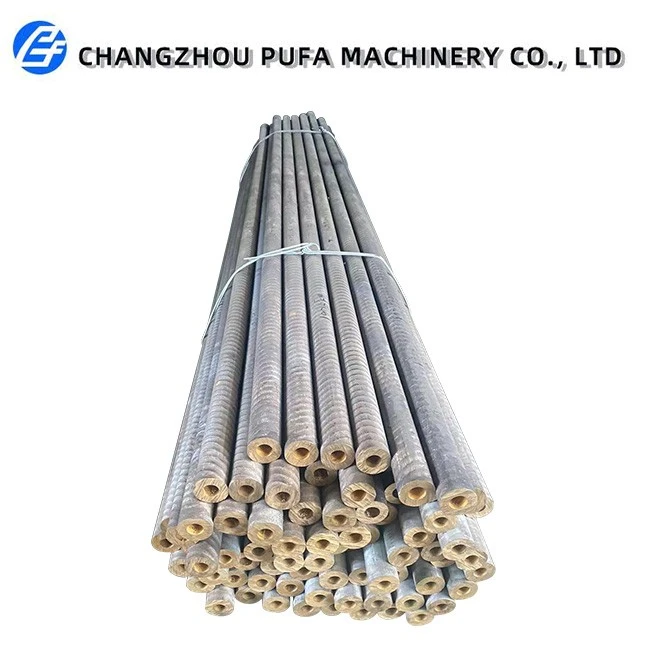
Bronze, an alloy primarily composed of copper and tin, has been utilized by humans for thousands of years due to its excellent strength, corrosion resistance, and aesthetic appeal. Among the various bronze products, bronze hollow bars are highly sought after in numerous industries for their unique properties and versatile applications. As a reputable supplier of Bronze Hollow Bars, I am excited to share with you the intricate process of manufacturing these remarkable components.
Raw Material Selection
The journey of manufacturing a bronze hollow bar begins with the careful selection of raw materials. The quality of the input materials significantly influences the final properties and performance of the product. For bronze, the two main constituents are copper and tin, but other elements such as zinc, lead, and phosphorus may also be added in varying proportions to achieve specific characteristics.
Copper serves as the base metal, providing excellent electrical and thermal conductivity, as well as good ductility. Tin is added to enhance the strength and hardness of the alloy, while also improving its corrosion resistance. The ratio of copper to tin can vary depending on the desired properties of the bronze. For example, Copper Nickel Tin Bronze is a specialized alloy that offers high strength, excellent wear resistance, and good fatigue properties, making it suitable for demanding applications.
In addition to copper and tin, other elements may be incorporated into the bronze alloy to further enhance its performance. Zinc, for instance, can improve the fluidity of the molten metal during casting, while lead can enhance machinability. Phosphorus is often added to deoxidize the alloy and improve its mechanical properties.
Melting and Alloying
Once the raw materials have been selected, they are melted and alloyed in a furnace. The melting process is typically carried out in an electric arc furnace or an induction furnace, which provides precise control over the temperature and composition of the molten metal.
The raw materials are loaded into the furnace and heated to a temperature above the melting point of copper, which is approximately 1,085°C (1,985°F). As the metals melt, they are thoroughly mixed to ensure a homogeneous alloy. The addition of other elements is carefully controlled to achieve the desired composition and properties.
During the melting and alloying process, it is essential to maintain a clean and controlled environment to prevent contamination of the molten metal. This involves using high-quality raw materials, proper furnace lining materials, and effective slag removal techniques.
Casting
After the molten bronze has been prepared, it is ready for casting. Casting is the process of pouring the molten metal into a mold to form the desired shape. There are several casting methods available for manufacturing bronze hollow bars, including sand casting, investment casting, and continuous casting.
Sand Casting
Sand casting is one of the oldest and most widely used casting methods. It involves creating a mold by packing sand around a pattern of the desired shape. The pattern is then removed, leaving a cavity in the sand mold. The molten bronze is poured into the cavity and allowed to solidify.
Sand casting is a relatively inexpensive and versatile method that can be used to produce large and complex shapes. However, it may result in a rough surface finish and lower dimensional accuracy compared to other casting methods.
Investment Casting
Investment casting, also known as lost-wax casting, is a more precise and detailed casting method. It involves creating a wax pattern of the desired shape, which is then coated with a ceramic shell. The wax is melted out of the shell, leaving a cavity in the ceramic mold. The molten bronze is poured into the cavity and allowed to solidify.
Investment casting offers high dimensional accuracy and a smooth surface finish, making it suitable for producing small and intricate parts. However, it is a more expensive and time-consuming process compared to sand casting.
Continuous Casting
Continuous casting is a modern casting method that involves pouring the molten bronze into a water-cooled mold, which continuously withdraws the solidified metal in the form of a continuous bar. This method offers high productivity and consistent quality, making it suitable for producing large quantities of bronze hollow bars.
Continuous casting also allows for better control over the grain structure and mechanical properties of the bronze, resulting in improved strength and ductility. However, it requires specialized equipment and a high level of technical expertise.
Machining
After the bronze hollow bar has been cast, it may require further machining to achieve the desired dimensions and surface finish. Machining is the process of removing material from the workpiece using cutting tools to create the final shape.
Common machining operations for bronze hollow bars include turning, milling, drilling, and grinding. Turning involves rotating the workpiece on a lathe and using a cutting tool to remove material from the outer surface. Milling involves using a rotating cutter to remove material from the surface of the workpiece. Drilling involves creating holes in the workpiece using a drill bit. Grinding involves using an abrasive wheel to remove material from the surface of the workpiece and achieve a smooth finish.
Machining can significantly improve the dimensional accuracy and surface finish of the bronze hollow bar, making it suitable for a wide range of applications. However, it is important to use the appropriate cutting tools and machining parameters to avoid damaging the material.

Heat Treatment
Heat treatment is often performed on bronze hollow bars to improve their mechanical properties. Heat treatment involves heating the workpiece to a specific temperature and then cooling it at a controlled rate to achieve the desired microstructure and properties.
Common heat treatment processes for bronze include annealing, quenching, and tempering. Annealing involves heating the workpiece to a temperature below the melting point and holding it at that temperature for a specific period of time, followed by slow cooling. This process helps to relieve internal stresses, improve ductility, and refine the grain structure of the bronze.
Quenching involves heating the workpiece to a high temperature and then rapidly cooling it in a quenching medium, such as water or oil. This process helps to increase the hardness and strength of the bronze. However, quenching can also cause the material to become brittle, so it is often followed by tempering.
Tempering involves heating the quenched workpiece to a temperature below the annealing temperature and holding it at that temperature for a specific period of time, followed by slow cooling. This process helps to reduce the brittleness of the bronze and improve its toughness.
Quality Control
Throughout the manufacturing process, strict quality control measures are implemented to ensure that the bronze hollow bars meet the required specifications and standards. Quality control involves inspecting the raw materials, monitoring the manufacturing process, and testing the finished products.
Raw materials are inspected for their chemical composition, purity, and physical properties to ensure that they meet the required specifications. During the manufacturing process, the temperature, composition, and other process parameters are monitored to ensure that they are within the specified range.
Finished products are tested for their dimensional accuracy, surface finish, mechanical properties, and chemical composition. Non-destructive testing methods, such as ultrasonic testing and X-ray inspection, may also be used to detect any internal defects or flaws in the bronze hollow bars.
Conclusion
The manufacturing of bronze hollow bars is a complex and intricate process that involves several stages, from raw material selection to final quality control. Each stage plays a crucial role in determining the final properties and performance of the product.
As a supplier of Bronze Hollow Bars, we are committed to providing our customers with high-quality products that meet their specific requirements. Our state-of-the-art manufacturing facilities, experienced technical team, and strict quality control measures ensure that our bronze hollow bars are of the highest quality and reliability.
If you are interested in purchasing bronze hollow bars or have any questions about our products, please do not hesitate to contact us. We look forward to discussing your needs and providing you with the best solutions.
References
- Metals Handbook: Properties and Selection: Nonferrous Alloys and Pure Metals, Volume 2, 9th Edition, ASM International.
- Manufacturing Engineering and Technology, 7th Edition, S. Kalpakjian and S. R. Schmid.
- Casting, Forming, and Welding: Processes, Materials, and Design, 2nd Edition, R. A. Granger and J. A. Schey.