

Hey there! As a bronze rod supplier, I often get asked about the differences between cast bronze rods and wrought bronze rods. It's a topic that might seem a bit technical at first, but I'm gonna break it down for you in a way that's easy to understand.
Let's start with the basics. Bronze is an alloy mainly made up of copper and tin, though other elements can be added too. The main difference between cast and wrought bronze rods lies in how they're made and the properties that result from those manufacturing processes.
Manufacturing Process
Cast Bronze Rods
Cast bronze rods are made through a casting process. First, the bronze alloy is melted down in a furnace until it turns into a liquid state. Once it's molten, the liquid bronze is poured into a mold that has the shape of a rod. As the bronze cools and solidifies in the mold, it takes on the form of the rod. This process allows for the creation of complex shapes and sizes. You can make rods with different diameters and lengths according to your needs.
Wrought Bronze Rods
On the other hand, wrought bronze rods are made through a process of working the metal. This usually involves processes like forging, rolling, or extrusion. Forging is when the bronze is heated and then hammered or pressed into shape. Rolling involves passing the bronze between rollers to reduce its thickness and increase its length. Extrusion is like squeezing toothpaste out of a tube - the heated bronze is forced through a die to create a rod with a specific cross - section.
Physical Properties
Strength and Ductility
Wrought bronze rods generally have better strength and ductility compared to cast bronze rods. The working processes of wrought bronze align the grain structure of the metal, which makes it stronger and more resistant to cracking under stress. This means that wrought bronze rods can withstand more bending and stretching without breaking. For example, if you need a bronze rod for an application where it will be subjected to high - stress conditions, like in a machine part that experiences a lot of force, a wrought bronze rod would be a better choice.
Cast bronze rods, while still strong, are more brittle. The casting process can sometimes create small voids or inclusions in the metal, which can reduce its overall strength and make it more prone to cracking. However, cast bronze rods can be made with a high level of hardness, which makes them suitable for applications where wear resistance is important.
Surface Finish
Wrought bronze rods usually have a smoother surface finish. The rolling and extrusion processes give the rods a more uniform and polished appearance. This smooth surface can be beneficial in applications where aesthetics matter, or where the rod needs to slide or fit precisely with other components.
Cast bronze rods may have a rougher surface due to the nature of the casting process. The mold can leave marks on the surface of the rod, and there may be some minor irregularities. However, this can be improved through post - casting processes like machining or polishing.
Chemical Composition and Alloys
Both cast and wrought bronze rods can be made from different bronze alloys. For example, the Tin Bronze C90300 is a popular alloy used for both types of rods. It has good corrosion resistance and is often used in marine applications. The UNS C83600 Alloy is another alloy that is commonly used in cast bronze rods. It has high strength and good machinability. The Leaded Tin Bronze Alloy is known for its excellent lubricity and is often used in applications where there is a lot of friction, such as in bearings.
Applications
Cast Bronze Rods
Cast bronze rods are often used in applications where wear resistance and the ability to be cast into complex shapes are important. They are commonly used in the manufacturing of valves, pumps, and other industrial equipment. The high hardness of cast bronze makes it suitable for parts that will be in contact with other hard surfaces and need to resist wear. For example, in a valve, the cast bronze rod can be used to make the stem, which needs to be able to withstand the repeated opening and closing of the valve without wearing out quickly.
Wrought Bronze Rods
Wrought bronze rods are used in applications where strength, ductility, and a smooth surface finish are required. They are commonly used in the aerospace and automotive industries, where parts need to be strong and lightweight. For example, in an aircraft, wrought bronze rods can be used to make structural components that need to withstand high - stress conditions during flight. They are also used in the production of jewelry and decorative items because of their smooth surface and ability to be easily shaped.
Cost Considerations
The cost of cast and wrought bronze rods can vary depending on several factors. Cast bronze rods are generally less expensive to produce because the casting process is relatively simple and can be done in large quantities. However, if you need a custom - shaped cast bronze rod, the cost of making the mold can add to the overall cost.

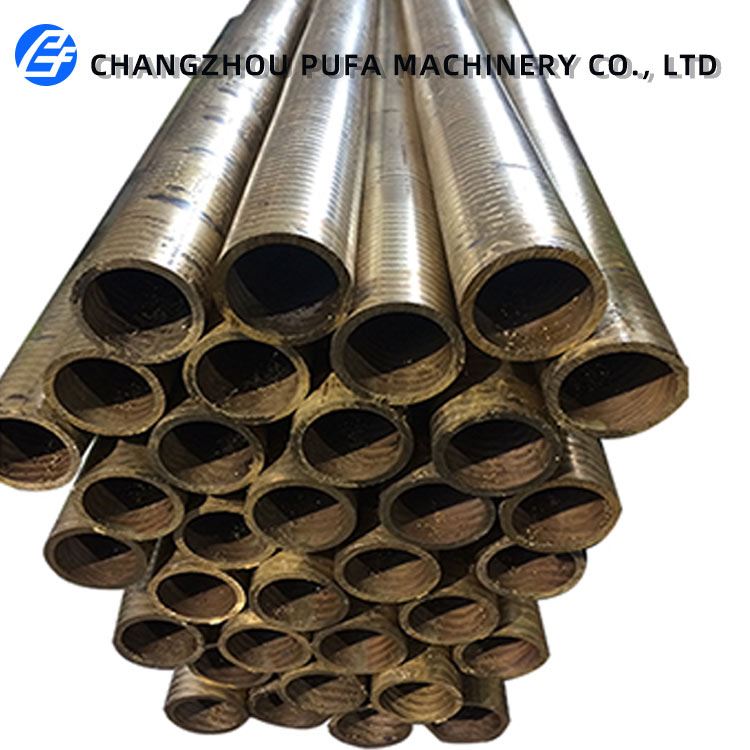
Wrought bronze rods are usually more expensive because of the additional processing steps involved. The forging, rolling, and extrusion processes require more energy and specialized equipment. But in some cases, the better properties of wrought bronze rods can make them a more cost - effective choice in the long run, especially if they reduce the need for frequent replacements due to wear or failure.
Conclusion
So, to sum it up, the main differences between cast bronze rods and wrought bronze rods come down to their manufacturing processes, physical properties, applications, and cost. Cast bronze rods are great for applications where wear resistance and complex shapes are needed, while wrought bronze rods are better for applications that require high strength, ductility, and a smooth surface finish.
If you're in the market for bronze rods, whether it's cast or wrought, I'm here to help. I can provide you with high - quality bronze rods that meet your specific requirements. Just reach out to me, and we can have a chat about your needs and find the best solution for you. Whether it's for an industrial project, a piece of jewelry, or anything in between, I've got you covered.
References
- Metals Handbook, Volume 2: Properties and Selection: Nonferrous Alloys and Special - Purpose Materials.
- ASM International. "Bronze Alloys: Properties and Applications."