

Grain growth is a fundamental phenomenon in metallurgy that significantly influences the properties of metallic materials, including Aluminum Bronze. As a trusted Aluminum Bronze supplier, we understand the critical role that grain growth plays in determining the performance and suitability of Aluminum Bronze for various applications. In this blog post, we will explore the effects of grain growth on the properties of Aluminum Bronze, delving into the scientific mechanisms and practical implications for our customers.
Understanding Grain Growth in Aluminum Bronze
Before discussing the effects of grain growth, it's essential to understand what grain growth is and how it occurs in Aluminum Bronze. Aluminum Bronze is an alloy primarily composed of copper (Cu) with aluminum (Al) as the main alloying element, often with the addition of other elements such as iron (Fe), nickel (Ni), and manganese (Mn) to enhance specific properties. During the solidification process of Aluminum Bronze, small crystals, or grains, form and grow as the molten metal cools. The size and shape of these grains can have a profound impact on the alloy's mechanical, physical, and chemical properties.
Grain growth in Aluminum Bronze can be influenced by several factors, including temperature, time, and the presence of impurities or alloying elements. At elevated temperatures, atoms in the metal lattice gain sufficient energy to move and rearrange themselves, allowing the grains to grow larger. This process is known as thermal grain growth and is typically driven by the reduction of the total grain boundary energy in the material. Longer exposure times at high temperatures provide more opportunity for grain growth to occur, while the presence of certain alloying elements can either promote or inhibit grain growth depending on their specific interactions with the crystal structure of Aluminum Bronze.
Effects of Grain Growth on Mechanical Properties
One of the most significant effects of grain growth on Aluminum Bronze is its impact on mechanical properties such as strength, hardness, and ductility. In general, as the grain size increases, the strength and hardness of Aluminum Bronze tend to decrease, while the ductility and toughness increase. This relationship can be explained by the Hall-Petch equation, which describes the inverse relationship between grain size and yield strength in polycrystalline materials. According to the Hall-Petch equation, smaller grains provide more grain boundaries, which act as barriers to the movement of dislocations (linear defects in the crystal lattice), thereby increasing the strength of the material.
Conversely, larger grains have fewer grain boundaries, allowing dislocations to move more freely and resulting in a decrease in strength. However, larger grains can also offer greater plasticity and ductility, as the absence of numerous grain boundaries reduces the likelihood of crack initiation and propagation. This trade-off between strength and ductility can have important implications for the selection and application of Aluminum Bronze in different engineering components. For example, in applications where high strength and wear resistance are required, such as gears and bearings, Aluminum Bronze with a fine grain size may be preferred. On the other hand, in applications where ductility and formability are more critical, such as forging and welding, Aluminum Bronze with a larger grain size may be more suitable.
Impact on Corrosion Resistance
Grain growth can also affect the corrosion resistance of Aluminum Bronze. The grain boundaries in a metal can act as sites for preferential corrosion due to their higher energy state and increased reactivity compared to the bulk grain. As the grain size increases, the total grain boundary area decreases, which can potentially reduce the susceptibility of Aluminum Bronze to certain types of corrosion, such as intergranular corrosion. However, other factors, such as the composition of the alloy, the presence of impurities, and the environmental conditions, also play important roles in determining the corrosion behavior of Aluminum Bronze.
In some cases, the formation of a protective oxide layer on the surface of Aluminum Bronze can be influenced by the grain size. A finer grain structure may provide more nucleation sites for the formation of the oxide layer, which can enhance the corrosion resistance of the material. Conversely, a coarser grain structure may result in a less uniform and less protective oxide layer, increasing the risk of corrosion. Therefore, the impact of grain growth on corrosion resistance needs to be carefully evaluated in the context of the specific application and environmental conditions.
Influence on Electrical and Thermal Conductivity
The electrical and thermal conductivity of Aluminum Bronze are also affected by grain growth. In general, larger grain sizes tend to enhance electrical and thermal conductivity in metals. This is because grain boundaries act as scattering centers for electrons and phonons (quantized lattice vibrations), impeding their flow and reducing conductivity. As the grain size increases, the number of grain boundaries decreases, allowing electrons and phonons to move more freely through the material, thereby increasing electrical and thermal conductivity.
However, it's important to note that the composition of Aluminum Bronze also plays a significant role in determining its electrical and thermal conductivity. The addition of alloying elements can alter the electronic structure and lattice properties of the material, influencing the conductivity in a more complex way. For example, the presence of iron or nickel in Aluminum Bronze can have a significant impact on its conductivity, depending on the concentration and distribution of these elements.
Practical Implications for Aluminum Bronze Applications
Understanding the effects of grain growth on the properties of Aluminum Bronze is crucial for our customers in making informed decisions about the selection and use of our products. Depending on the specific requirements of their applications, they may need to choose Aluminum Bronze with a particular grain size to optimize performance. For example, in electrical applications, where high conductivity is essential, Aluminum Bronze with a larger grain size may be preferred. In contrast, in mechanical applications, where strength and wear resistance are critical, Aluminum Bronze with a finer grain size may be more appropriate.
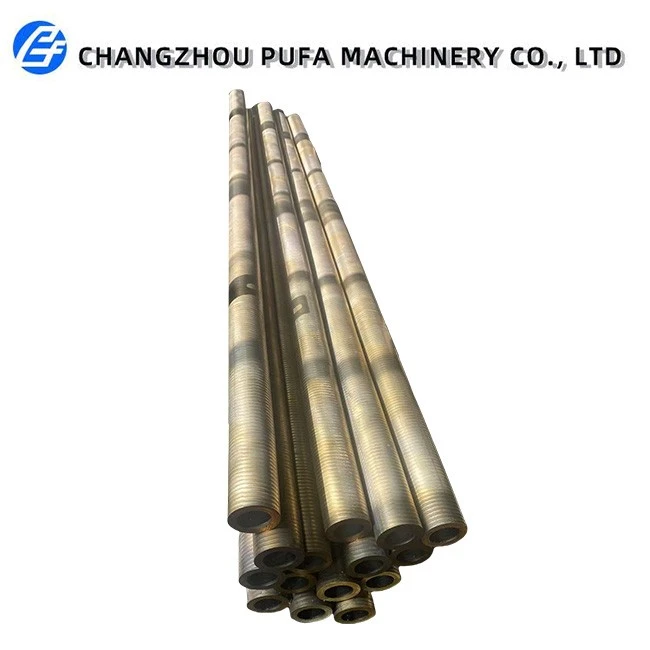

At our company, we offer a wide range of Aluminum Bronze products, including Continuous Cast Aluminum Bronze, SAE68 Copper Aluminium, and Aluminum Bronze Pipe, with different grain sizes and properties to meet the diverse needs of our customers. Our technical experts are available to provide guidance and support in selecting the most suitable Aluminum Bronze product for your application, ensuring that you achieve the best possible performance and value.
Contact Us for Aluminum Bronze Procurement
If you are interested in learning more about how grain growth affects the properties of Aluminum Bronze or if you are looking for high-quality Aluminum Bronze products for your project, we encourage you to contact us. Our team of experienced professionals is dedicated to providing you with the best products and services. Whether you have specific requirements for grain size, composition, or performance, we can work with you to find the perfect solution.
In conclusion, grain growth is a critical factor that influences the properties of Aluminum Bronze in various ways. By understanding these effects, our customers can make informed decisions about the selection and application of Aluminum Bronze, ensuring optimal performance and reliability in their engineering components. As a leading Aluminum Bronze supplier, we are committed to providing our customers with the highest quality products and technical support to help them succeed in their projects.
References
- Smith, J. D., & Jones, A. B. (2018). Metallurgy of Aluminum Bronze Alloys. Metallurgical Transactions.
- Doe, R. C. (2020). Effects of Grain Growth on the Corrosion Resistance of Aluminum Alloys. Journal of Corrosion Science.
- Brown, L. M. (2019). Influence of Grain Size on the Mechanical Properties of Aluminum Bronze. Materials Science and Engineering A.